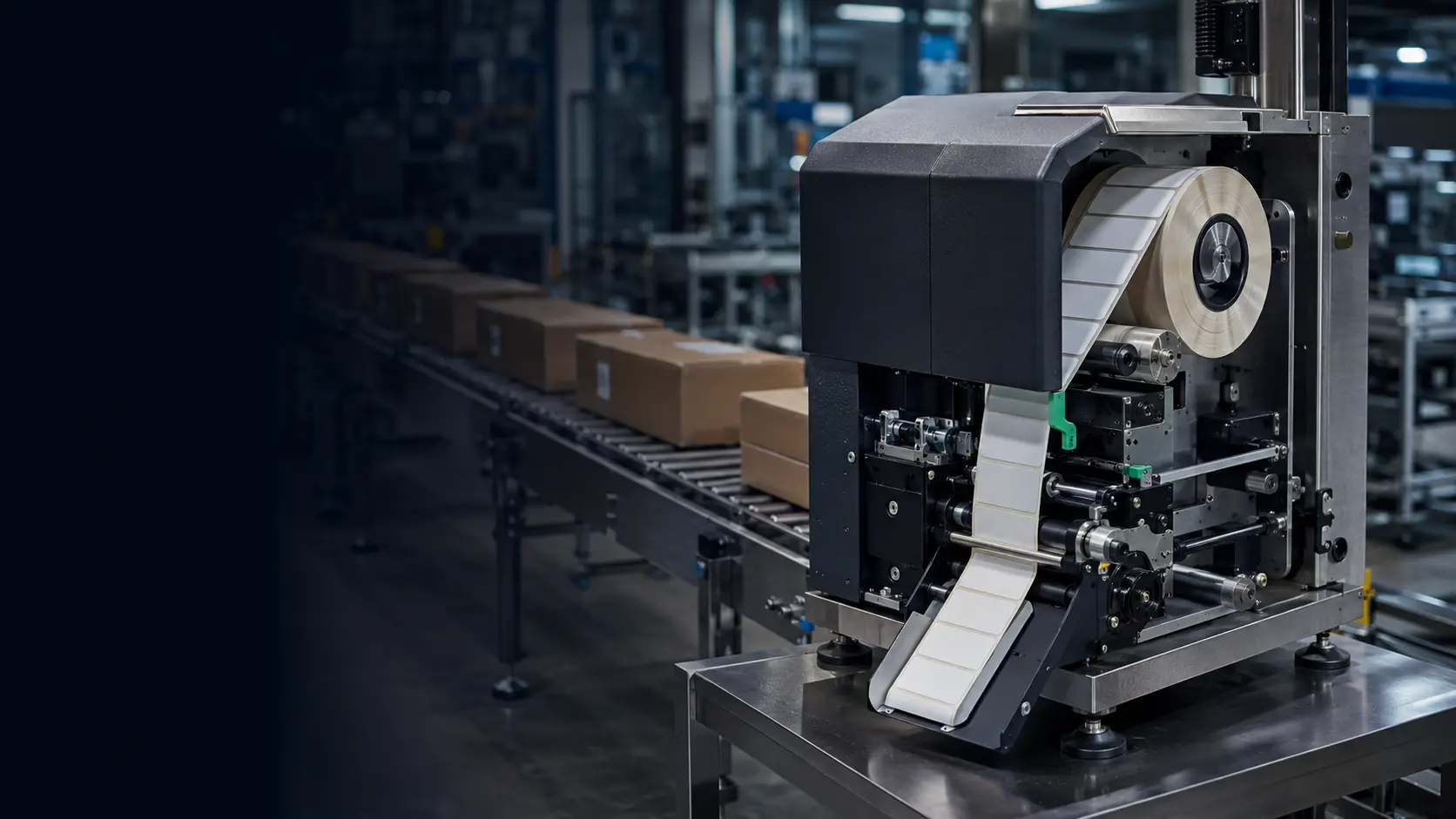
RFID identification systems
RFID label printers built around your process
Specify, print and encode UHF/RAIN RFID, HF/NFC and specialist smart labels with practical UK application support.
- Sample label testing
- Printer & media matching
- Integration planning
RFID solutions for:
ManufacturingWarehousingLogisticsRetailAsset trackingRFID printing & media
One route from label concept to encoded output
Choose the right technology for the read behaviour, product, data and environment—not simply the first label that fits.
Ask for a recommendation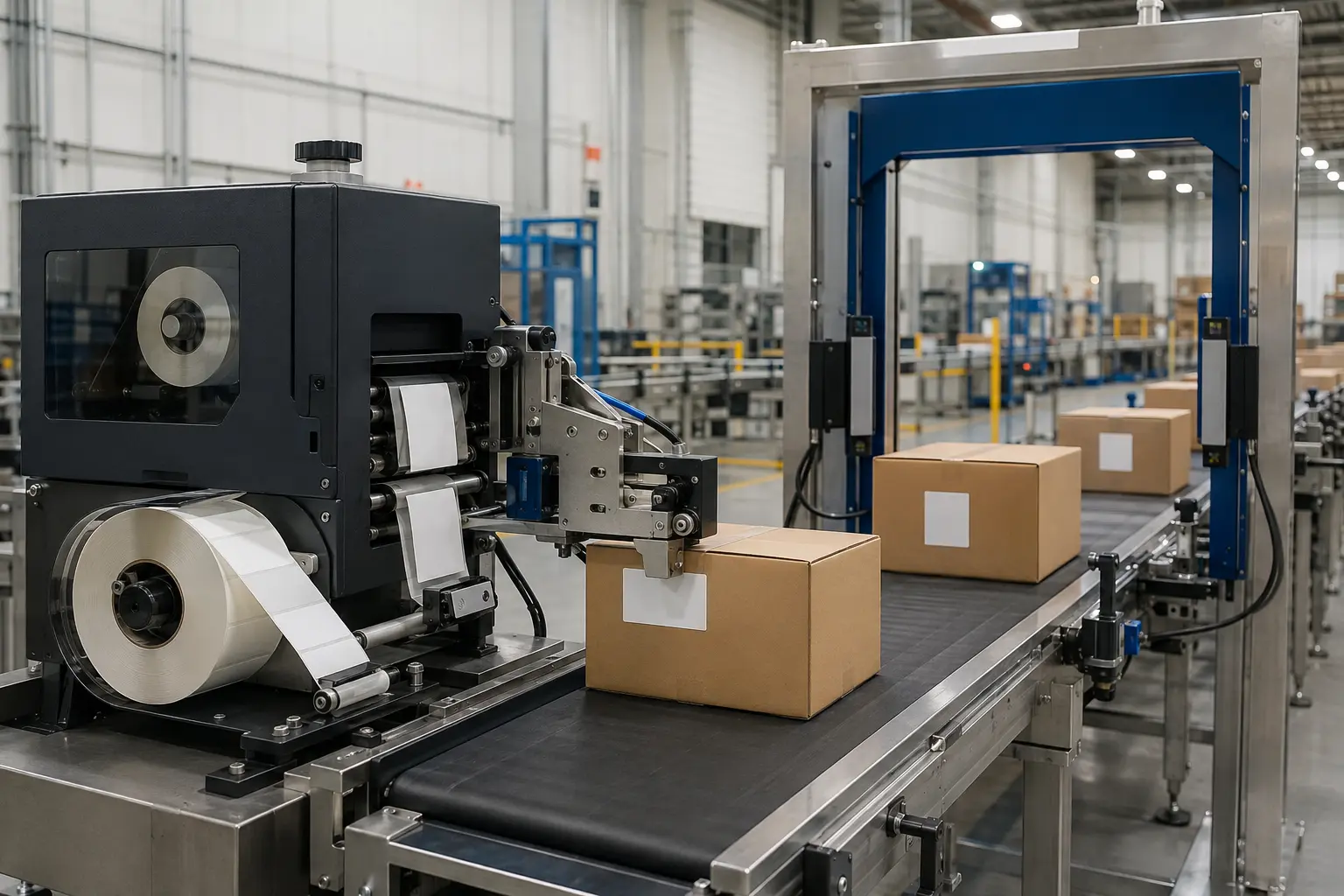
De-risk the specification
The label, printer and read environment must work together
RFID performance changes with the product, packaging, inlay, orientation and reader geometry. We build the recommendation around representative conditions.
- 01
Understand the item
Material, dimensions, contents, lifecycle and label position.
- 02
Define the identity
Printed data, EPC or NDEF content, serialization and verification.
- 03
Validate the workflow
Print volume, operator steps, interfaces, readers and exception handling.
Find your starting point
Different read behaviours need different RFID labels
Answer one question to see the technology we would investigate first. A final recommendation follows application and sample review.
to narrow the search
Quick application check
What do you need to identify?
Start with a UHF / RAIN RFID workflow
A UHF printer-encoder and application-matched smart label are usually the right starting point for cases, pallets and warehouse capture.
See the recommended solutionSmart-label consumables
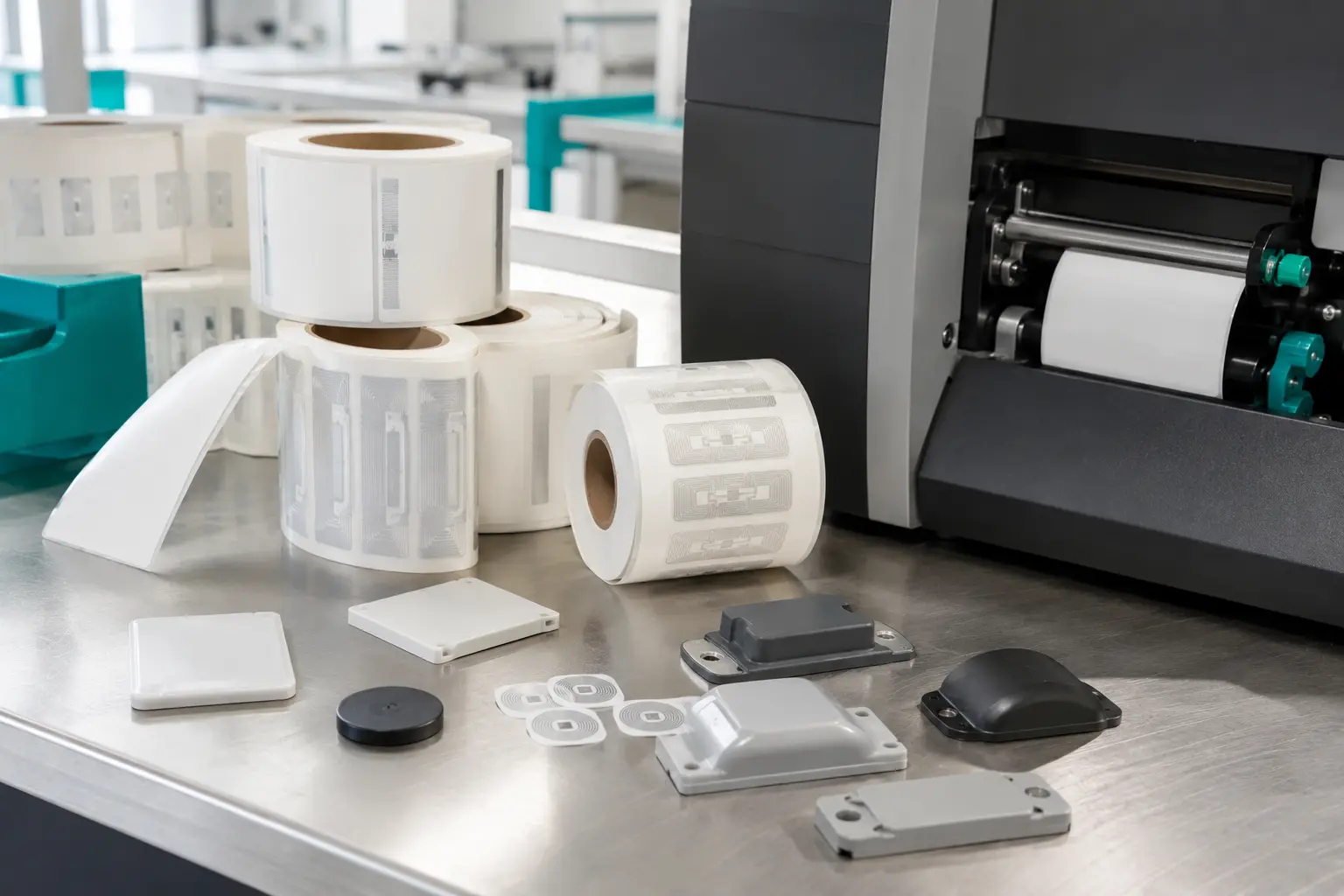
Media engineered for the item—not just the printer
Match RFID inlay performance with facestock, adhesive, roll construction and print durability. Consistent media protects both encoding reliability and day-to-day operation.
Interoperability by design
Standards-aware RFID projects
We account for the relevant air-interface, tag-data and NFC formats in the specification, including project requirements based on GS1 EPC, EPC Gen2 / ISO/IEC 18000-63 and NFC Forum NDEF workflows.
Reconcile printed labels when RFID encoding or job recovery fails
An RFID printer workflow should account for every issued, rejected and unused label. Check the visible print, encoded value and business identity together, then define what happens when encoding fails or the print job is interrupted. A readable electronic value is not the whole release decision.
Approve the media and encoding setup
Confirm the actual label dimensions, inlay position and printer configuration. Follow the selected printer’s media and RFID calibration guidance when the approved construction changes. Keep those settings with the material reference rather than assuming that two rolls with similar visible dimensions behave identically.
Define a release check for one label
State which printed fields and encoded fields must match and how they associate with the intended item record. Decide where that check happens and what prevents an unaccepted label from being applied. Include the actual item-mounted reading duty as a separate qualification from read-back inside the printer.
Keep failed labels out of usable stock
Agree how a failed encode or spoiled print is identified, separated and recorded. Do not silently reuse a unique identifier without resolving whether a physical label bearing it exists. If the printer retries automatically, make the distinction between the failed attempt and the accepted replacement visible.
Resolve job restart before reprinting
After a power or connection interruption, establish which labels were accepted and which remain pending. A print queue, an application acknowledgement and the physical output may have different states. Use a controlled reconciliation step rather than assuming that resending the original quantity will produce exactly the missing labels.
A worked planning example
For illustration, an order needs twenty accepted labels and two encoding attempts fail. Twenty accepted identities may require more than twenty physical labels to pass through the printer. The record should distinguish the twenty released labels from the rejected attempts and any unused output; it should not present the raw media count as accepted production.
Acceptance questions to resolve
- Can the print, encoded value and assigned item be checked together?
- Are rejected labels separated and their identifiers resolved?
- Does restart reconciliation prevent unintended duplicates or shortfalls?
- Are applied-label tests distinct from printer read-back?
For the next step, discuss this application using the examples and unresolved decisions above.
RFID printer FAQs
Practical answers before you specify
Every reliable recommendation begins with the product, label and process.
Ask a technical questionWhich RFID label printer do I need?
The right platform depends on RFID technology, label width and inlay position, print volume, resolution, connectivity and environment. We start with your product, media and data workflow, then narrow the equipment choice.
What is the difference between an RFID printer and a normal label printer?
An RFID printer-encoder combines normal thermal label printing with an encoder that writes and verifies data in the RFID inlay. A standard label printer can print visible information but cannot commission the electronic identity.
Can you supply RFID labels as well as the printer?
Yes. We can help specify RFID smart labels, tags and compatible ribbons around the product, read environment, printer and durability requirement.
Do you support RFID printer integration?
We can help define connectivity, label software, data structure and host-system requirements, then plan the hand-off between printing, encoding and your operational systems.
Can we test our product before ordering?
Representative product, label and data samples are strongly encouraged. Testing can identify issues with inlay position, RF performance, print quality and encoder calibration before production rollout.
Ready to narrow the options?
Tell us what you need to label, encode and track.
Does successful RFID encoding prove the label will work on the item?
Successful read-back at the printer confirms only the defined encoding check under those conditions. The applied label still needs to be assessed on the real item at its intended read point. Keep the printed identity, encoded identity and business record associated, and define how failed labels and replacements are reconciled. The printer-encoder guide follows this complete workflow from identifier choice to applied-label trials.